Black Savage Afro7


 The mid-seventies in Nairobi were a time of tremendous growth. In the first decade after independence, the city’s population doubled and the economy grew at a rapid pace. Pop culture experienced a boom, live music thrived around the city and young, aspiring musicians were exposed to a wide variety of local, regional and international influences. This was the time Nairobi developed into a musical melting pot that nurtured artists who are well remembered even outside Kenya, such as Les Mangelepa (still performing!), Matata, or Joseph Kamaru. The music industry increased its capacity and by 1975 local pressing plants were able to produce over 10,000 records per day. Amidst the proliferation of Kenyan music being released by hundreds of bands and solo artists, some of the most interesting records did not receive proper distribution or promotion, and four decades down the line they remain ungoogleable, unmentioned in discographies and generally unheard.
 One band whose recorded output has been all but invisible until recently, but who are well remembered by people who were young in 1970s Nairobi, is Black Savage. Their music was released on an LP and three singles between the mid-70s and the early 80s, and has remained out of print ever after. The early years of the band, whose members met during their secondary school years in Nairobi, are well described in the liner notes accompanying the current reissue compilation by Afro7. Band leader Gordon was the son of professor Simeon Ominde, who had led the reform of Kenya’s educational system in 1964 upon independence, and who was teaching at Makerere University in Uganda in 1956 when his son was born. Gordon Ominde’s earliest memories included Louis Armstrong’s concert in Kampala in 1961, where – at the age of four – he was invited on stage and started conducting the band. Musical inspiration also came from his sisters who were singers, and from attending musical classes, although at Lenana – a former whites-only boarding school which was gradually being reformed to cater to Kenyans of different backgrounds – music education meant studying Beethoven and Mozart. Together with a group of younger students who shared an interest in music, including original Black Savage members Job Seda, Jack Otieno and Ali Nassir, he started practice sessions using the musical instruments that the school provided. After completing school the band decided to rejoin and pursue a career in music, despite all odds: obtaining their own instruments, finding rehearsal space and getting the approval of their families would all have been challenges in mid-seventies Kenya.
 In 1973, two Kenyans of Indian heritage who had run a successful photo business since the mid-50s, gave Kenyan music a boost by investing in a 24-track recording studio, and by acquiring EMI, Pathé and other label licenses for recording and distributing local and international music. In the next few years the Sapra studio, record plant, tape duplication facility and colour printing business would become the go-to spot in Nairobi’s Industrial Area for musicians and labels from all around East Africa. The studio was built and – as the owners struggled to find a sufficiently trained local engineer – also run by Detlef Degener, a German who had come to Kenya to construct studios for training journalists. Between 1975 when Sapra studio opened and the end of 1978 when the company went bankrupt, he recorded hundreds of bands from as far as Zambia (many Zamrock albums were produced under his guidance). Black Savage also came to record at Sapra for their debut album, which was to be released by EMI.
 ‘Something for someone’ provides a refreshing look at Kenya’s musical landscape of the mid-seventies. Black Savage weren’t drawing their primary influence from rumba or benga but from psych and folk rock, funk and r&b. All songs were in English, and the lyrics were politically and socially aware, breathing the activist vibe of the international ‘summer of love’ generation. The band released three more singles. ‘Do you really care/Save the savage’ is two sides of semi-acoustic protest folk, ‘Grassland/Kothbiro’ embraces the group’s Kenyan identity through the music and language, and ‘Fire/Rita’ (released around 1982 on the short-lived Kenyan CBS label) sounds as if the group attempts to reinvent itself – as a reggae band.
Given the rarity of the original vinyl releases, the lack of airplay and the absence of biographic info on the band, one could conclude that Black Savage ended up all but forgotten. It’s reassuring that the musical paths of the band members didn’t end there, though. Job Seda (who changed his name to Ayub Ogada) and  Jack Otieno (today known as Jack Odongo) joined the African Heritage Band. Job then became an actor (Out of Africa), joined the UK record label Real World and scored Hollywood soundtracks. Jack went on to produce numerous Kenyan bands throughout the 1980s and 90s, and is still active as a gospel musician. Gordon Ominde continued his studies but ultimately chose for a career as a musician, and his music took him to England and to Germany where he started a family; he died unexpectedly in 2000. Mbarak Achieng is credit for composing Black Savage’s Kothbiro, which Ayub Ogada re-recorded and which ended on the soundtrack of the Constant Gardener. The memory of Black Savage as Kenya’s most prolific rockers of the 1970s remains vivid in the hearts of thousands of Nairobians, and the current Afro7 reissue is a worthy first attempt at introducing their best work to an international audience.
The Full Black savage compilation Pre-order is in effect now, go to our shop now!
Hear one full track from the album below or check out our soundcloud page with snippets of all the tracks!
 A3) Black Savage Band ‘Sharpeville’ A3) Black Savage Band ‘Sharpeville’ |
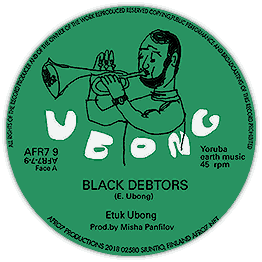






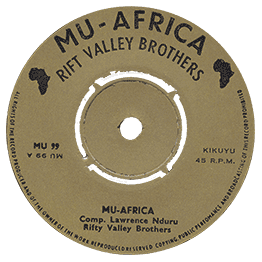
 This song rekindles memories of the fiery wave of the black consciousness movement that swept across the African diaspora from 1960s through to the ’80s. The Rift Valley Brothers band’s lyrics are seemingly a clarion call imploring local Kenyans to come to terms with their rich African roots and home-grown heroes. These were likely inspired and penned in praise of Kenya’s liberation struggle and key Mau Mau frontline freedom fighters. Several unsung and long forgotten ‘bush’ generals are saluted for their sweat, gallantry and bloodshed. But the underlying message is undeniably emphatic on the pressing need (especially for the younger generation) to embrace selfconsciousness and pride in their African heritage.
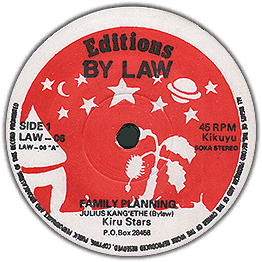
 “One of the best Kikuyu disco tracks I’ve ever heard…!” Rickard Masip said having found few copies of ‘Family Planning’ on his last trip to Kenya in 2013. Often the continuing search for something fresh and original can be a striving fare, especially when you have to look through thousand and thousands of dirty old singles. Even though there are many Kikuyu Benga singles, few have the magnitude of By Law’s KIRU1 and KIRU6. Over a hypnotizing groove with a heavy backbeat, Family planning tells us the story of a family dispute between husband and wife, set in a traditional Kikuyu rural setting. The bone of contention in the marriage is that the wife has had enough with giving birth to more kids. They have 8 kids so far but the arrogant and rude husband is still not satisfied and wants more. Though grim it may seem the outfall is the man accept the humble argument of the wife. Notice the slight shift to a more Soukouss driven beat towards the end of the track. The bass heavy ‘Mumbi’ is in more positive fashion a classic love song about the authors passion for a woman he named the song after. He goes on tour to Nyeri where she is from and tells all the other guys to lay off his true love. Massive thanks to Moses Mungai for the translation!
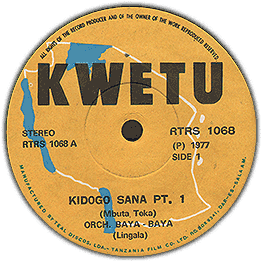
 In times of “Feelabration” here at Afro7, we’ve tried to trace the Afrobeat sound in the East and Central Africa. Are there any musicians from Kenya, Tanzania or Congo that can match the prowess and sound of Nigerias Fela Kuti and his counterparts? The closest we come to trace this sound is Johnny Bokelo’s

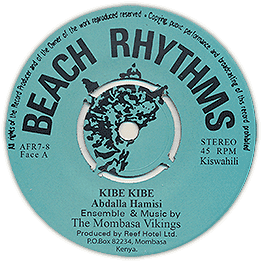
 Kenya is renowned for its cross-breed of benga and rhumba rhythms. But listening to What Is It [That You Want] and My Everything – cut circa 1978 – these double-sided 45inch single tracks seem somewhat misplaced categorized as ‘Kenyan’ songs. That the funky and indisputably bouncy, disco pop-groove recordings were pressed in Nairobi during late 1970s, is a glaring pointer to the regional showbiz capital being a bedrock of diverse musical influences. Foreign pop music saturated playlists on then sole national radio broadcaster – with sprinklings of local songs accorded sporadic airplay. These formative twin tracks are credited to composer Abdalla ‘Dala’ Hamisi – who had just joined Mombasa Roots band alongside Ahmed ‘Emil’ Juma [both formerly affiliated to defunct Mombasa Vikings] and Tamrat Kabede [drums]. The group is arguably among most consistent bands plying their musical trade along Kenya’s Coastal strip. Their informal gigs began way back during mid 70s and one can still encounter the ‘Roots’ engaged in regular or private performances on evenings or weekends, often serving up covers and original cuts. The group prides itself as “.. a live and dancing band for all occasions..” Much like other musical outfits from the coast, the band formed in 1977, started out as a family affair. Its original line–up comprised the ‘Juma Brothers’ – Saeed [manager], Suleiman [keyboards], Ebrahim [guitarist] and then Ahmed ‘Emil’ [sax/vocals/guitar], who came on board later on.
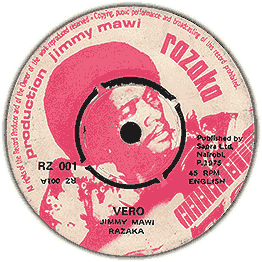
 As early as 1950s, electric guitars were a phenomenon in the Madagascar islands. In subsequent years, it was typical for lead guitarists to layer their strumming with dazzling riffs on a song hurtling along a frantic pace. This could have been the basis which likely influenced the late Jimmy Mawi’s style, long before he packed his bags destined for the Kenyan capital where he pitched tent in the mid 70s. Unwittingly, he was just coming ‘back home’ as at some point – Madagascar supposedly opted to break away from East Africa’s fold. More significantly, the islands have on instances been described as the country “..where old rock albums go to die..” This uncanny aphorism perhaps resonates with the groove that infuses hard-to-find, rare – until recently, handful tracks credited to Mawi. The not-so-popular Madagascan guitarist virtuoso’s insistent dance-frenzied, Afro-funk singles
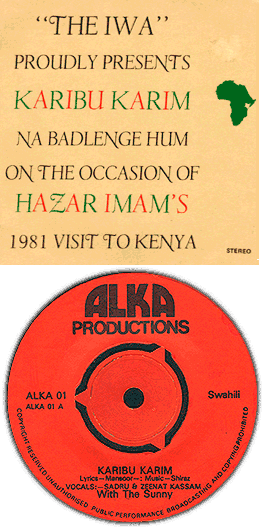
 Hazar Imam or
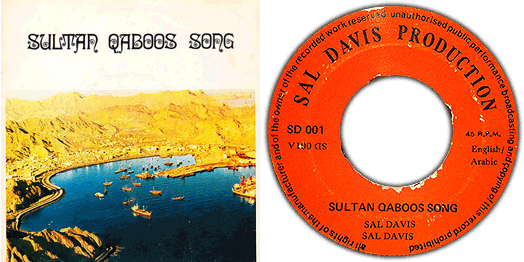
 Kenyan singer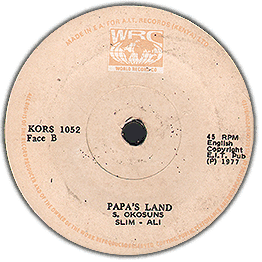
 With a good dose of Reggae and Eddy Grant’s magic touch, Nigerian born Sonny Okusun had a big international hit in 79 with the political fueled ‘Fire in the Soweto’. 2 years earlier he had released

 Famous band from Tanzania, this release was before they changed their name to DDC Mlimani Park Orchestra after a sponsor deal. Notice the name typo done by the Kenyan label press. Read Werner Graebner
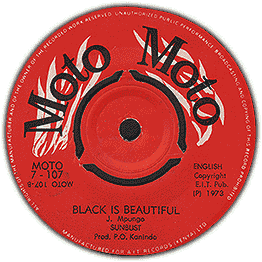
 MOTO MOTO
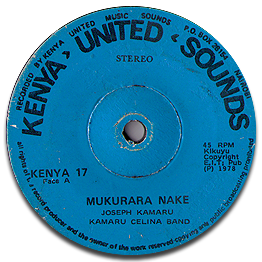


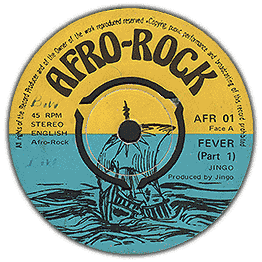
 In all its splendor here is the original Kenyan ‘AFRO-ROCK’ label pressing from the mid-seventies. Let’s follow the lifespan of this song: 1977 –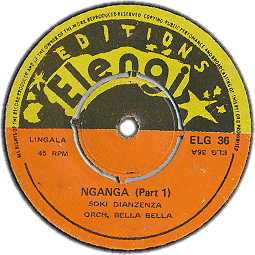



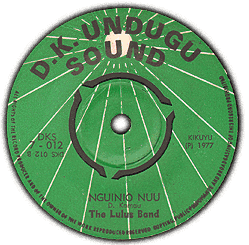
 One of many Lulu’s band singles. A prolific Kikuyu group that recorded for several labels, the groups private D.K. Undugu Sounds was run by the groups leader Daniel Kamau. Expect excellent loud pressing and tight production, simple funky aural esthetics’s as tight drumming, catchy vocals and a thousand dollar guitar riff! Perfect for the dancefloors of 2012.
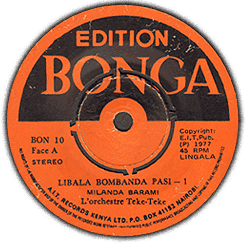



 Massive thanks to
 So it wouldn’t be long before we featured our first Ethiopian Track. Big thanks to our man Vemund in Addis for sorting out a trade. Mahmoud Ahmed a veteran on the Ethiopian scene for nearly five decades delivers here a great mellow soulful performance, backed up with a great rhodes lick and horn section by the Dahlack Band. Oozing with excellence and released on his own private label Mahmoud TV & Radio house. Again we’d love to hear the meaning of the lyrics, please post if you have something to share. [audio:https://afro7.net/songs/Mahmoud-Ahmed-Yefikir-Woha-Temu.mp3]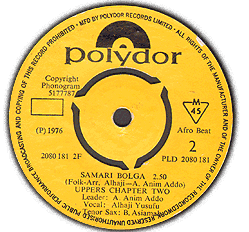
 We hit the first day of 2012 with this brilliant track from The Uppers hailing from Ghana. Unfortunately we don’t have much information on them except their former band name was Uppers International and they released a couple of singles on Polydor. With a mellow groove, keys, funky drumming and a jazzy trumpet and tenor-sax solo the scarce 2.50 track-time will have you wanting more. Also we’d love to know what the lyrics are in English, post a reply if you can translate. [audio:https://afro7.net/songs/Uppers-chapter-two-Samari-bolga.mp3|titles=Uppers chapter two – Samari bolga]
 Happy X-MAS to all our followers! Here is a track on the polygram subsidiary label Tsavo. For those of you who are familiar with the name your reference might be the Kenya national parks; Tsavo east and west. Although the name has a more dreadful meaning in Kikamba, check the facts on

 Johnny Bokelo, the counterpart of Congos renowned Franco Luambo had a belt of labels and groups during the seventies and eighties. Like many other Congolese musicians he went to Kenya to finance and release his music. In this case, the song “Nakupenda Sana” is sung in Swahili, meaning again “I love you ..” A tight guitar lick, thematic horns with a neat breakdown. Somewhat reminiscent of a Manu Dibango tune. If you heard it before it was booted with a bogus name on a French 70’ties lp called











sorry fixed now!
why is the "buy" link dead? frustrating!
is the faduma kassim out of print? the buy the single link is dead...
Yusufu was also part of The Silver Survivors Experience.
This was the band that opened up the Florida Nightclub in Nairobi it was previously based in Mombasa and was…